Wings, Water and Worship
Developed a community-led ecotourism framework that links ecological health, public health, and sustainable livelihoods through ethnography and community engagement at Thirupudaimaruthur Village Pancahyat.
As a researcher, I led a biodiversity conservation and livelihood project grounded in participatory research and ethnography. Working closely with 200+ stakeholders from community members and women’s groups to government departments.
I explored how people understand conservation and how their lives intersect with local biodiversity. I helped design pathways for community-based ecotourism, collaborated with experts to address WaSH challenges, and co-authored a detailed ecological restoration and monitoring plan for the village.
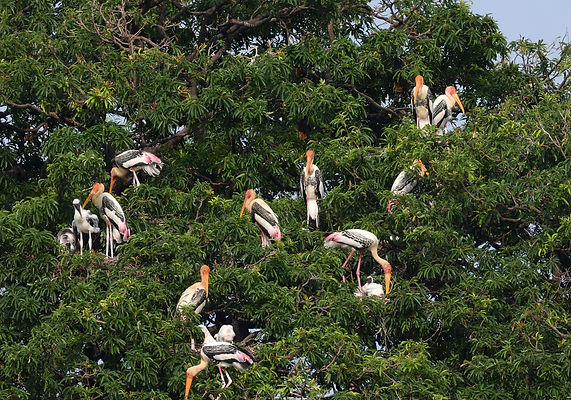
Painted storks roosting on a mahua tree inside the temple premises.
About the village
Thirupudaimaruthur is a small village in Tamil Nadu known for its wetlands, nesting birds, and the Thirupudaimaruthur Bird Conservation Reserve (TBCR), India’s first community-driven conservation reserve. The village also sits beside the Tamiraparani River and is home to a centuries-old Shaivite temple, making it a unique mix of ecology, culture, and livelihood.

Documentation of flora and fauna of the TBCR
illustration credit: Spaces + Dialogues


Glimpse of the participatory engagements and ethnographic work conducted as part of the study
When I began working with the community, many women were struggling with unstable livelihoods such as beedi rolling and daily-wage labour. Together with local partners, we explored whether a community-based ecotourism model could create new opportunities by building on the village’s natural and cultural strengths. At the same time, we had to understand the challenges that could limit this vision from poor waste management to sanitation gaps and river pollution. My work focused on engaging with residents, mapping everyday realities, and helping shape pathways that support both people and the landscape they depend on.

Woman of the village rolling beedis
Outcome
We developed a community-led ecotourism framework that connects public health, ecological health, and local economic growth. By working with specialists in conservation, sanitation, waste management, and behavioural design, we co-created pathways that help the village strengthen livelihoods while restoring its natural and cultural heritage.
The model brings together efforts to improve waste systems, revive river health, build environmental stewardship, and enhance hygiene and sanitation practices, all foundational for any sustainable tourism effort. Most importantly, the framework is designed with capacity-building and long-term ownership in mind, ensuring the community can lead, manage, and benefit from the initiative well into the future.